Three photos, three attempts, one measured alternator
The goal: take three ordinary photos of a part (front, side and back) and get back an accurate 3-D model you can turn in your hand. No scanner and no tape measure. It took three very different approaches to get there, and each one taught the next.
The work was done by AI agents and open-source tools on one computer, with a human reviewing. Chapter 1 was run by OpenAI's Codex; chapters 2 and 3 by Claude, Anthropic's AI model, working as a coding agent. Each chapter names the tools it used.
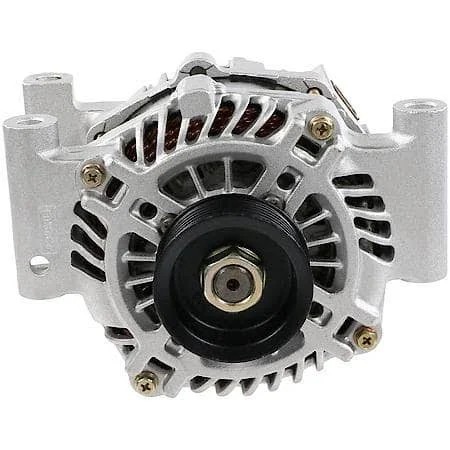
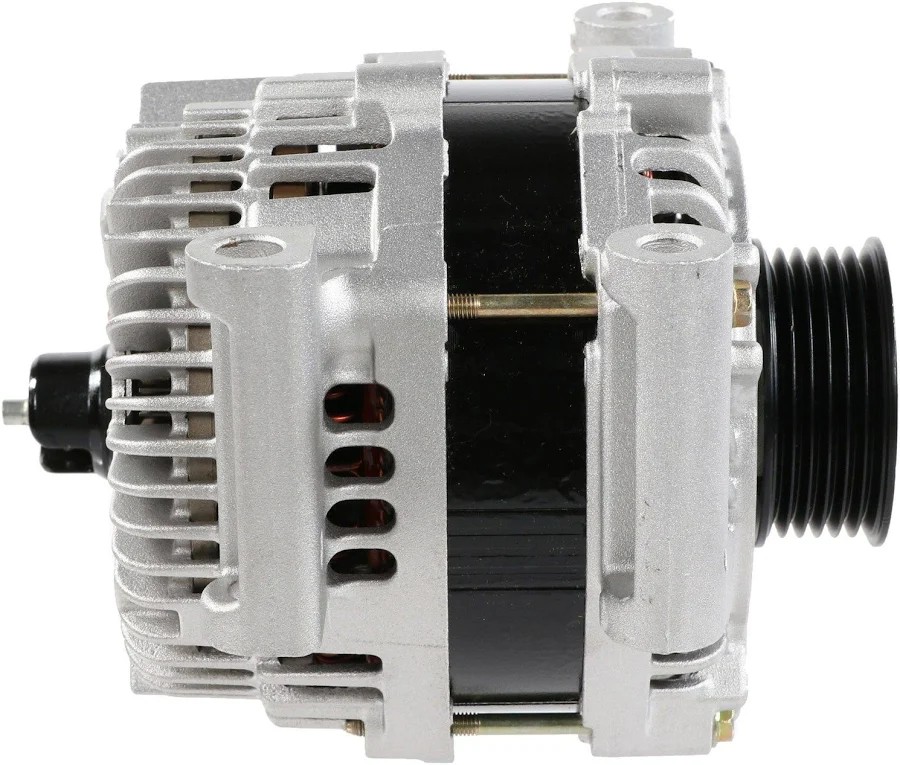
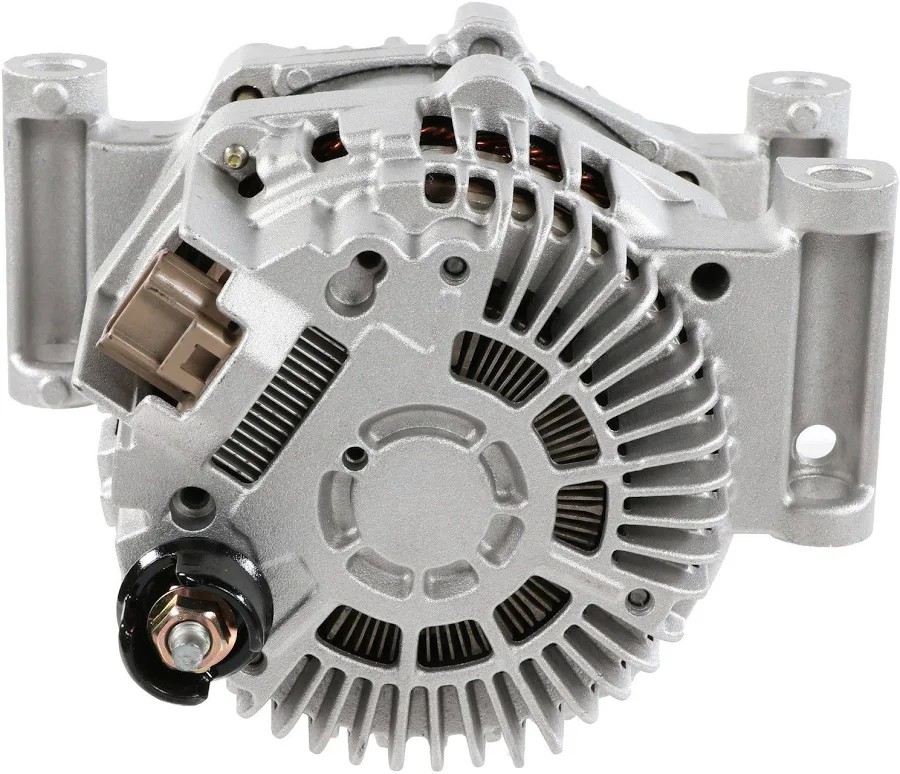
The entire input, all three times: these three photos.
The story in three chapters
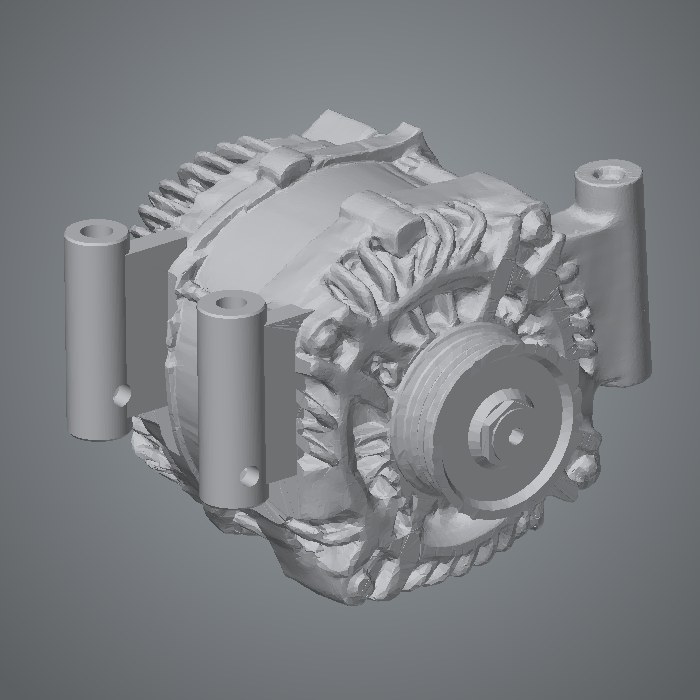
The melted model
A neural network guessed the whole part from the photos. It looks right at a glance and is warped up close.
94.2 % outline · 58 % edges · 3.5 mm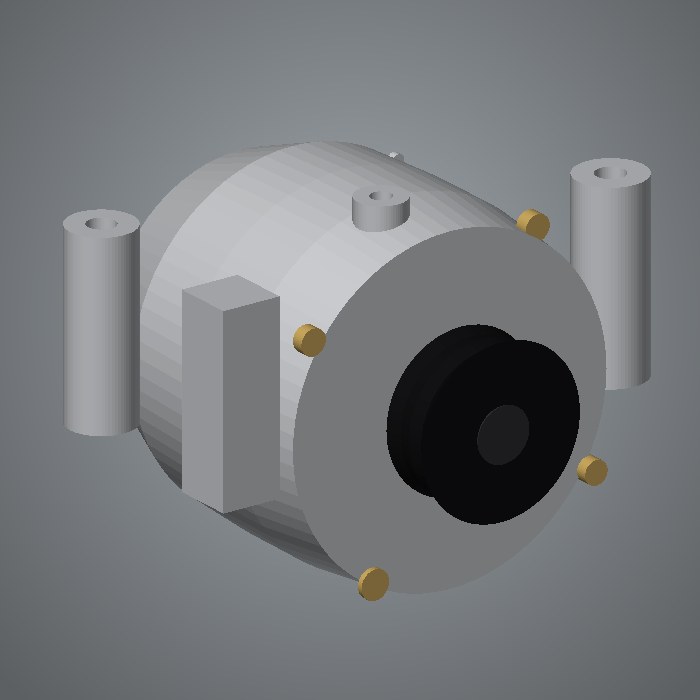
Simple shapes
Recovered cameras, automatic scale and clean shapes placed by a fitter. Right size, right place, almost no detail.
93.9 % outline · 16 % edges · 2.5 mm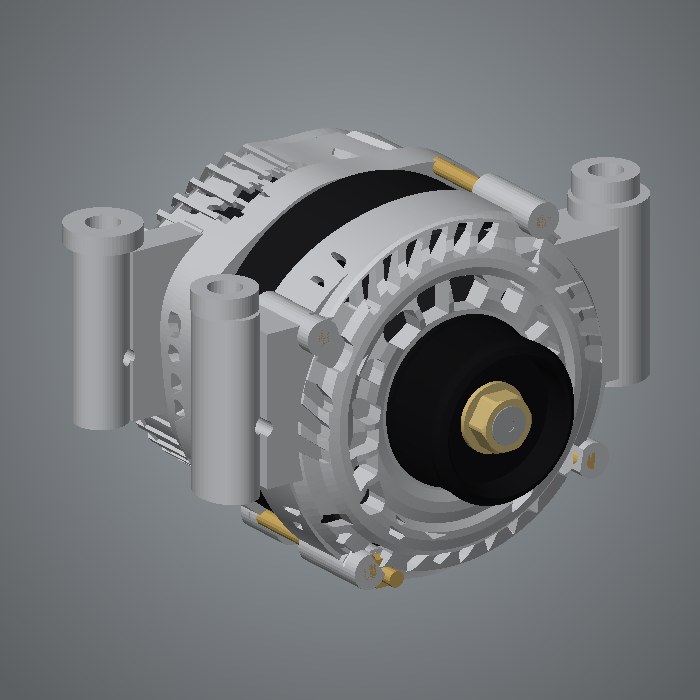
The measured model
Designed part by part like real CAD, every dimension taken from the photos and every change checked against them.
96.2 % outline · 61 % edges · 2.4 mmWhat each attempt taught the next
- A model that imagines the part can't be corrected into one that measures itThe neural mesh had no real dimensions to adjust. Patching clean pieces onto it kept its warped housing.
- Cameras and scale can be recovered; detail has to be designedA 3-D vision model worked out where each photo was taken from, and the belt grooves gave the scale. But a handful of generic shapes can't carry fins, vents and castings.
- Design like an engineer, check like an inspectorThe final model is built from real engineering shapes, and every change was kept only if it matched all three photos better.
Scorecard
All three models, scored by the same program against the same three photos. Each figure is the average of the front, side and back photo.
| Model | Outline match | Edges matched | Edge precision | Depth error | Triangles |
|---|---|---|---|---|---|
| 1 · Melted | 94.2 % | 58 % | 60 % | 3.45 mm | 140,000 |
| 2 · Simple shapes | 93.9 % | 16 % | 52 % | 2.49 mm | 5,180 |
| 3 · Measured | 96.2 % | 61 % | 68 % | 2.43 mm | 61,888 |
- Outline match: how much of the part's outline in each photo the model covers, and nothing more.
- Edges matched: the share of edges visible in the photos that the model reproduces within 3 pixels. Edge precision is the reverse: the share of the model's edges that are really in the photos.
- Depth error: average distance from the model's surface to a 3-D point cloud recovered from the photos, on surfaces the photos actually show.
- The simple-shapes model is scored with the cameras its own pipeline recovered; the other two use the measured model's cameras. The melted model was given its best possible placement first, so the comparison is fair to it.